
Clean beauty is a term we see everywhere, but what does it truly mean? Many products claim to be “clean,” “natural,” or “non-toxic,” yet these labels can be confusing or misleading. At its core, clean beauty means choosing products free from harmful ingredients and made with transparency about sourcing and production.
However, not all products labeled clean meet these standards. Greenwashing and vague marketing often cloud the reality, making it essential for us to look beyond the label. Understanding what ingredients to avoid and how brands communicate their practices helps us make informed choices for our skin and the environment.
By learning to decode clean beauty claims and recognizing trustworthy brands, we can spend our money wisely and support products that genuinely align with clean principles. This knowledge empowers us to navigate the growing market with confidence and clarity.
Understanding Clean Beauty Claims
Many brands use terms like “clean,” “non-toxic,” or “natural” without clear definitions, creating confusion. It is essential to look at specific ingredients and legal standards—or the lack thereof—to understand what these claims truly imply.
Definition of Clean Beauty
Clean beauty lacks a universal legal or industry-standard definition. Unlike terms such as “organic” or “vegan,” which have established certification processes, clean beauty is more subjective.
Generally, it refers to products formulated without ingredients linked to health risks. However, what counts as “safe” varies by brand or expert opinion. This means clean beauty can mean different things depending on the product or company.
The absence of regulation allows brands to set their own criteria. We must critically evaluate the ingredient lists and company transparency rather than relying solely on the label.
Common Ingredients Avoided
Products labeled clean typically avoid certain ingredients suspected or proven to be harmful. These often include:
- Parabens (preservatives linked to hormonal concerns)
- Sulfates (cleansing agents that can irritate skin)
- Phthalates (plasticizers possibly linked to reproductive harm)
- Synthetic fragrances (a mix of undisclosed chemicals)
- Formaldehyde-releasing preservatives
Here are some our favorite clean ingredient alternatives:
- Juice Beauty Stem Cellular Anti-Wrinkle Moisturizer
- SheaMoisture Coconut & Hibiscus Curl & Shine Shampoo
- Skylar Clean Perfume
- Paula’s Choice 2% BHA Liquid Exfoliant
Brands may also exclude ingredients like mineral oil, certain silicones, or animal-derived substances, depending on their standards. This list is not exhaustive, as definitions of safety vary widely.
Knowing these common exclusions helps us identify products that align closer to clean beauty principles. Checking ingredient labels remains the most reliable step.
Decoding ‘Non-Toxic’ and Related Terms
Terms like “non-toxic,” “natural,” and “green” sound appealing but are often vague or unregulated. “Non-toxic” implies safety but lacks a consistent scientific or legal benchmark.
“Natural” indicates ingredients derived from natural sources, but it doesn’t guarantee safety or environmental benefit. Many natural substances can be allergens or irritants.
We should be cautious of marketing that combines these terms without clear explanations or certifications. Transparency about sourcing, formulation, and testing provides more trustworthiness than labels alone.
Evaluating the whole product profile and third-party verification is key when assessing claims beyond “clean beauty.”
Navigating Clean Beauty Labeling
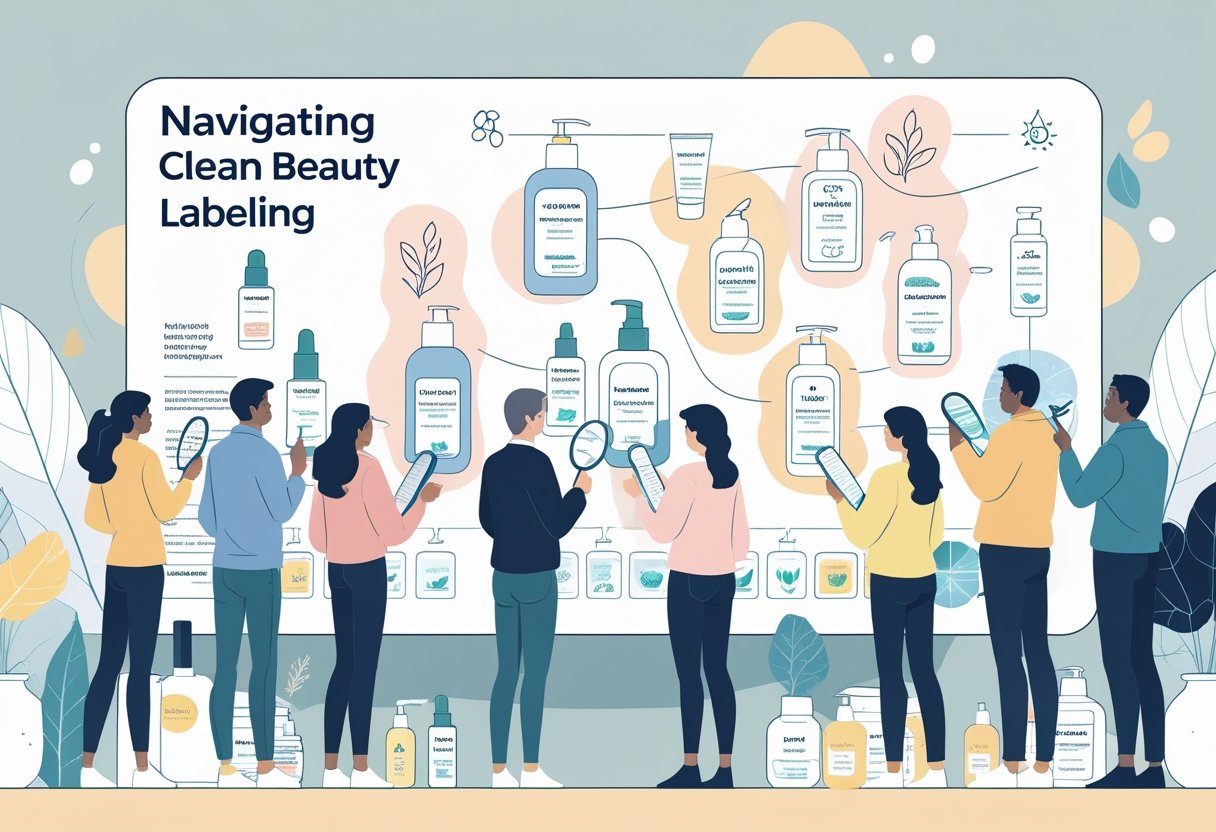
We must approach clean beauty labels carefully because the term lacks standardized meaning. Understanding the challenges in regulation and the role of certifications helps us make better choices.
Regulatory Gaps and Industry Self-Policing
“Clean beauty” is not legally defined, meaning products can claim this label without meeting uniform standards. Unlike regulated categories such as “organic,” clean beauty relies heavily on brand honesty and industry self-regulation.
This creates room for greenwashing, where companies market products as cleaner or safer than they actually are. Without clear rules, the responsibility falls on us to scrutinize ingredients lists and seek transparency.
We should be cautious of vague claims and learn to identify common potentially harmful ingredients often avoided in clean beauty, such as parabens, sulfates, and phthalates. Awareness helps us navigate this unregulated space more safely.
Certifications and Third-Party Standards
Certifications provide some assurance but vary widely in scope and rigor. Recognized labels to look for include USDA Organic, ECOCERT, and Cruelty-Free International.
Some certifications focus on ingredient origins, banning synthetic chemicals. Others emphasize ethical practices, such as no animal testing or fair trade sourcing.
We recommend checking what each certification specifically covers. Some may only verify a single aspect, so combining certifications can give a clearer picture of overall product integrity.
Below is a brief table of common certifications:
| Certification | Focus | Scope |
|---|---|---|
| USDA Organic | Ingredient sourcing | Agricultural standards |
| ECOCERT | Natural and organic | Ingredient and production |
| Leaping Bunny | Cruelty-free | Animal testing ban |
Using certified products reduces guesswork but does not guarantee perfection, so ongoing vigilance remains necessary.